
Multicast - Rendezvous Point (5)
Rendezvous Point (RP) Deployment Methods
A Rendezvous Point (RP) is a router that serves as the common shared root for a multicast shared tree. Multiple RPs can be configured to cover different multicast group ranges. However, for a network to operate correctly, every router within a PIM domain must map a given multicast group address to the exact same RP.
There are three primary methods used to define and distribute RP information across a PIM domain: Static RP, Bootstrap Router (BSR), and Auto-RP.
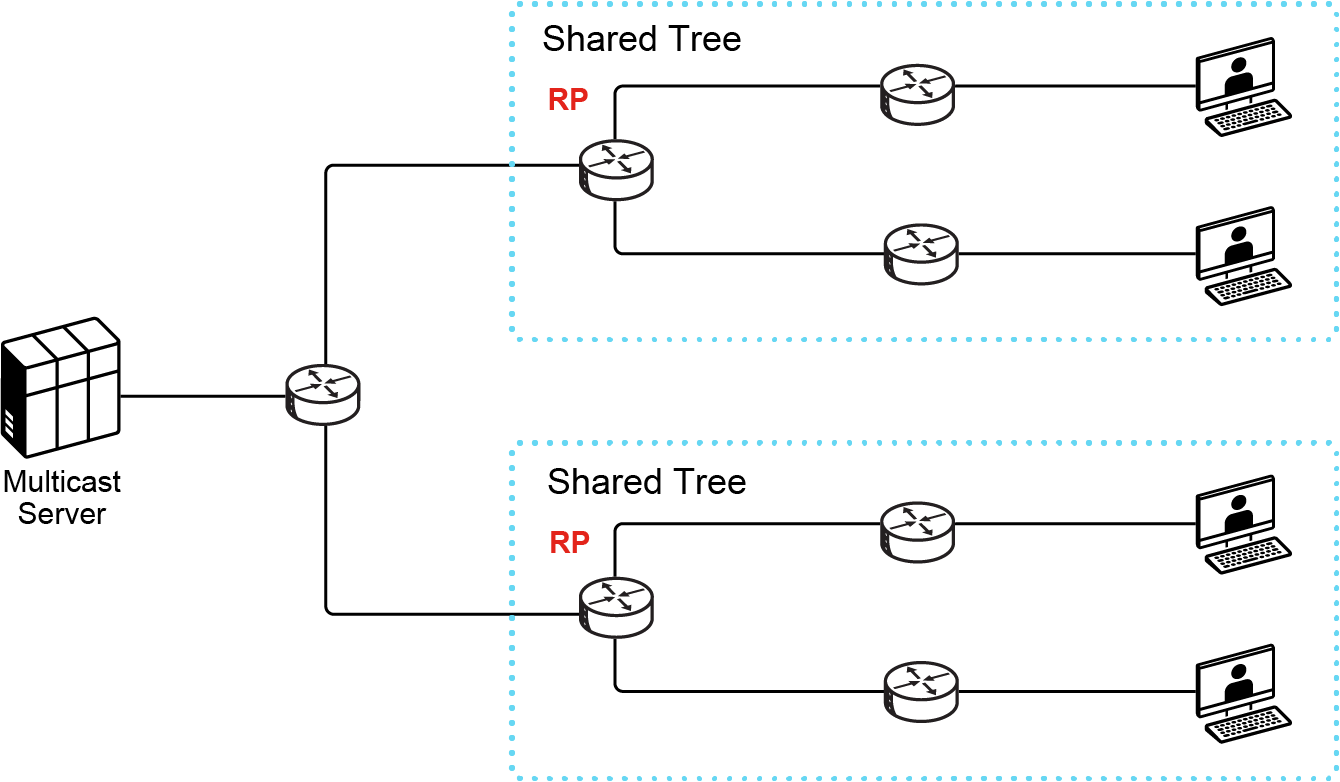
1. Static RP
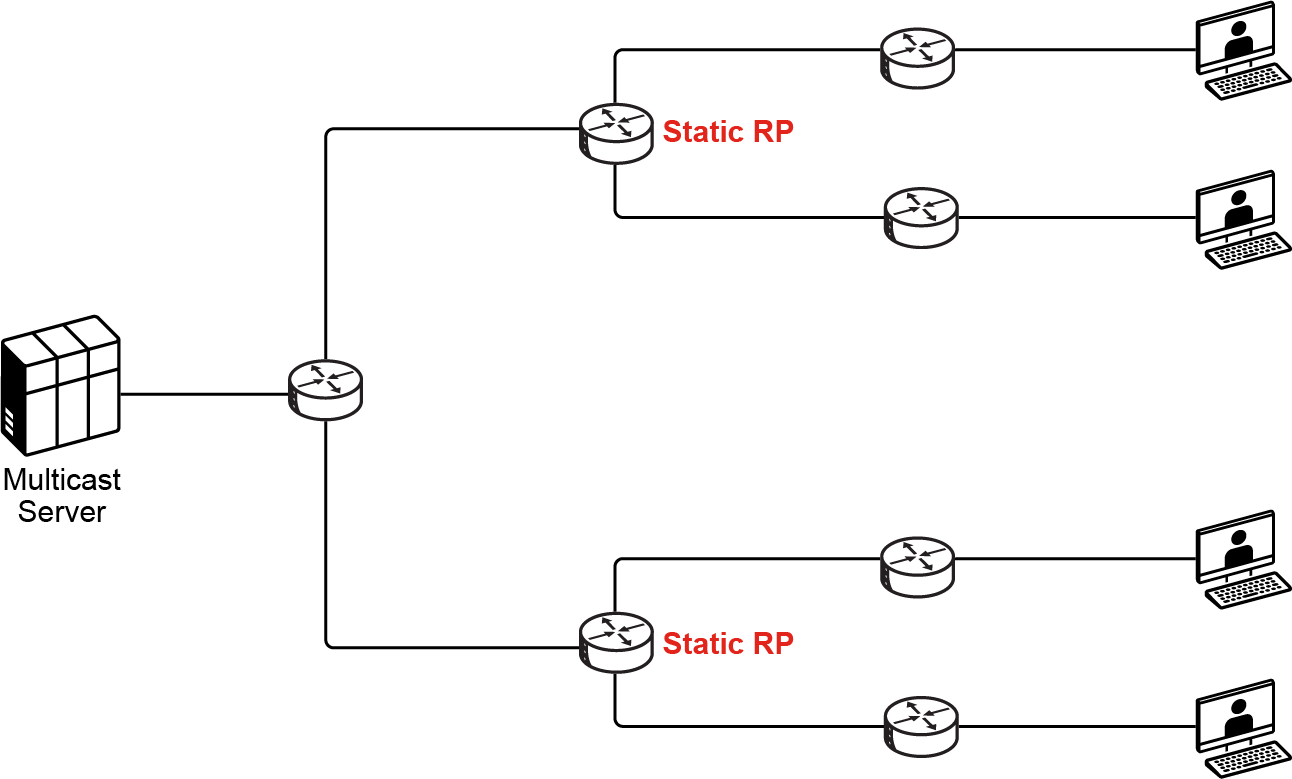
Static RP requires manual configuration of the RP IP address on every single router within the multicast domain.
-
Mechanics: As shown in the image, specific routers are manually designated as the RP for a group range. If an RP address changes, every router in the network must be updated manually.
-
Precedence Rule: Static RP can coexist with dynamic mechanisms, but dynamically learned RP information takes precedence over manually configured static RPs by default.
-
Pros: Simple to implement in small networks, requiring only one or two lines of configuration per router.
-
Cons:
-
Highly laborious and error-prone in large, complex environments.
-
Lacks a native failover mechanism; if a static RP fails, traffic drops until manual intervention occurs (unless combined with an advanced feature like Anycast RP).
-
Does not inherently support load balancing.
-
2. Bootstrap Router (BSR)
BSR is an industry-standard, automated mechanism (defined in RFC 5059) used to distribute RP information dynamically.
-
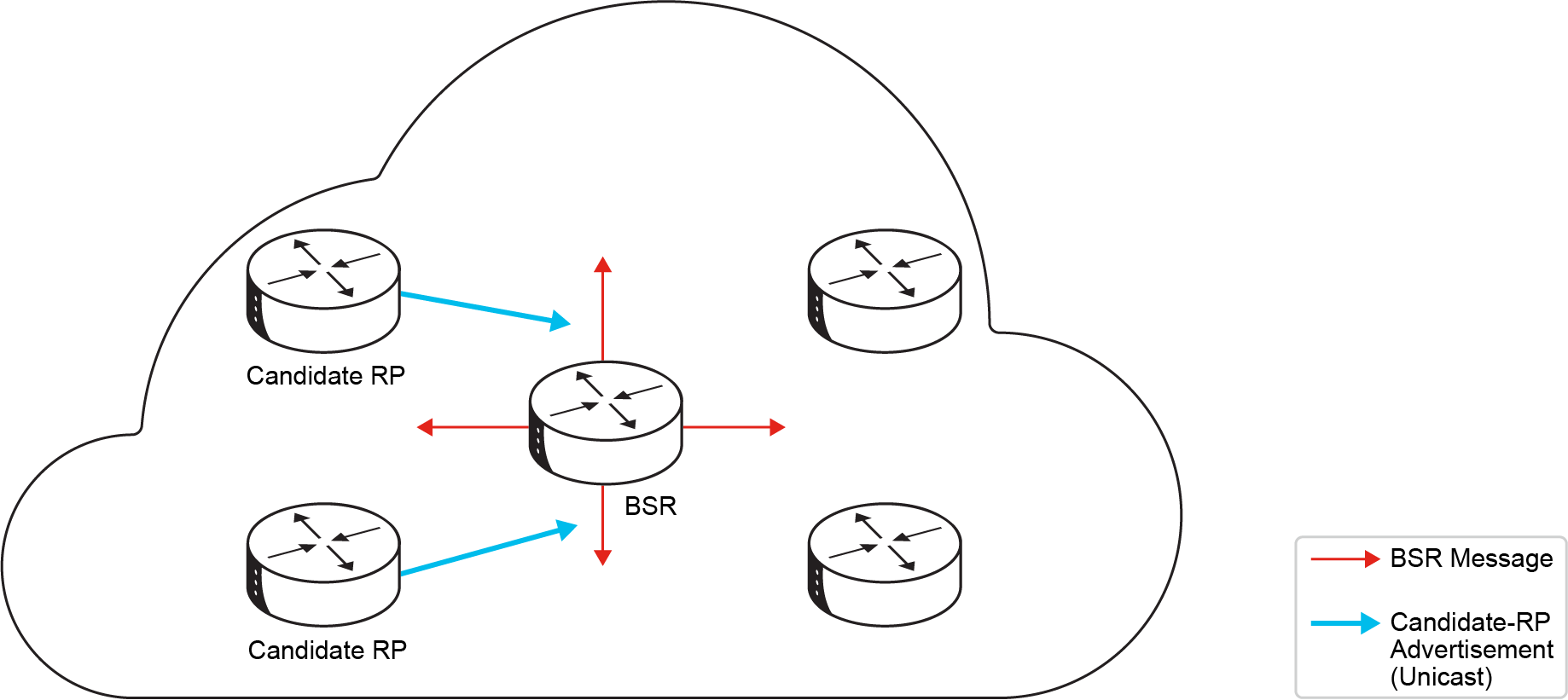
Mechanics: As shown in the image, the architecture relies on an elected BSR and Candidate RPs (C-RPs):
-
Candidate RPs send unicast "Candidate-RP Advertisements" to the elected BSR.
-
The BSR collects these advertisements into a list called the "RP set."
-
The BSR floods this complete RP set to all routers in the domain using hop-by-hop BSR Messages.
-
Each individual router runs a identical, common algorithm locally to select the exact same RP address for any given multicast group.
-
-
Pros:
-
Nonproprietary open standard that works across multi-vendor hardware.
-
Reduces administrative overhead since configuration is restricted only to the candidate routers.
-
Highly robust with built-in failover; if a primary RP fails, a backup RP from the set automatically takes over.
-
-
Cons: Cannot coexist with Auto-RP; only one dynamic protocol must be configured in the network.
3. Auto-RP
Auto-RP is a legacy, Cisco-proprietary automation mechanism designed to distribute RP mapping information without manual per-router configuration.
-
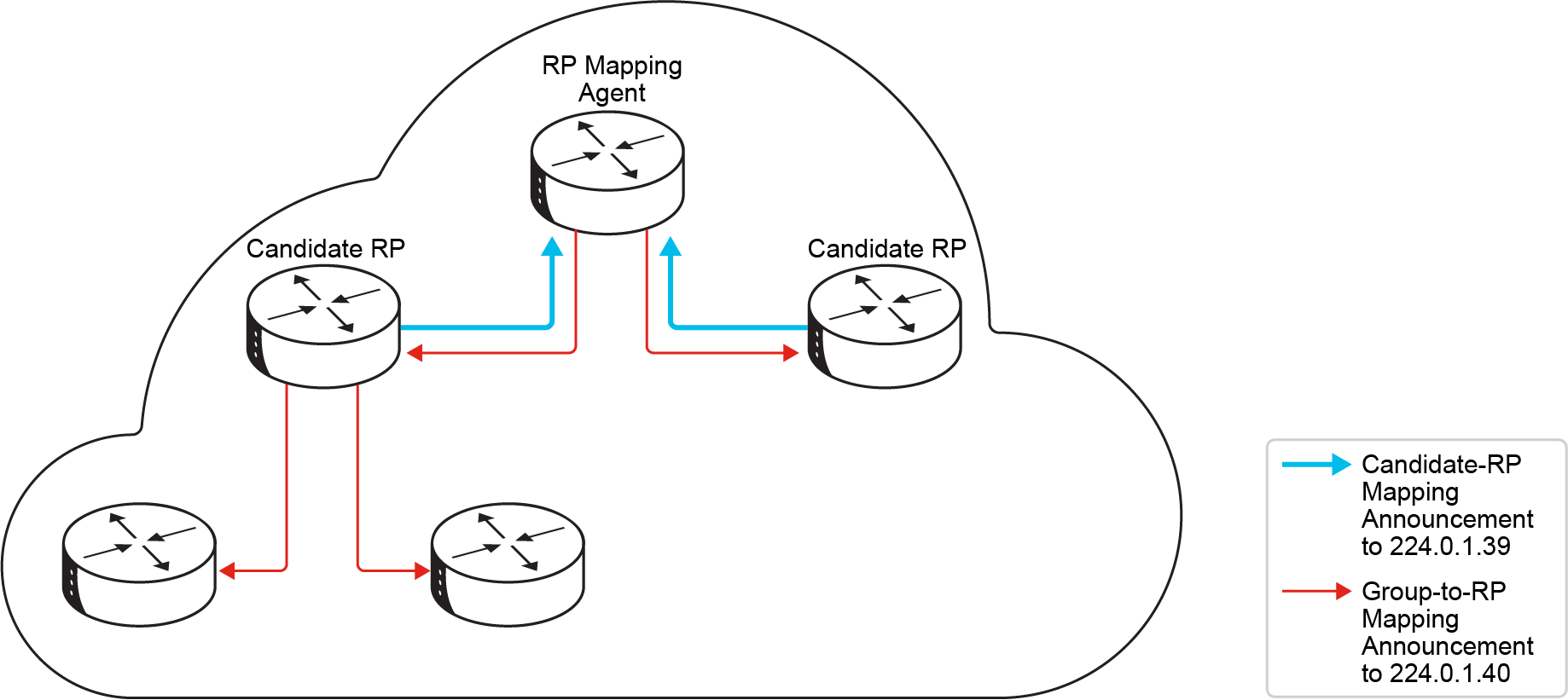
Mechanics: As shown in the image, Auto-RP relies on two separate functional components and two dedicated multicast groups:
-
Candidate RPs (C-RPs): Announce their availability by broadcasting periodic "RP-announcement" messages to the well-known multicast group 224.0.1.39 (CISCO-RP-ANNOUNCE).
-
RP-Mapping Agents: Join group 224.0.1.39 to listen to all candidate offers. The Mapping Agent resolves any conflicts, determines the authoritative group-to-RP mappings, and broadcasts the final decision to group 224.0.1.40 (CISCO-RP-DISCOVERY).
-
PIM Routers: All routers in the domain join group 224.0.1.40 to receive and cache the authoritative RP mappings.
-
-
Pros: Fully automated discovery, easy updates, and native support for backup RPs and failover profiles.
-
Cons:
-
Cisco proprietary protocol.
-
Not supported for IPv6 multicast.
-
Cannot coexist with BSR in the same network.
-